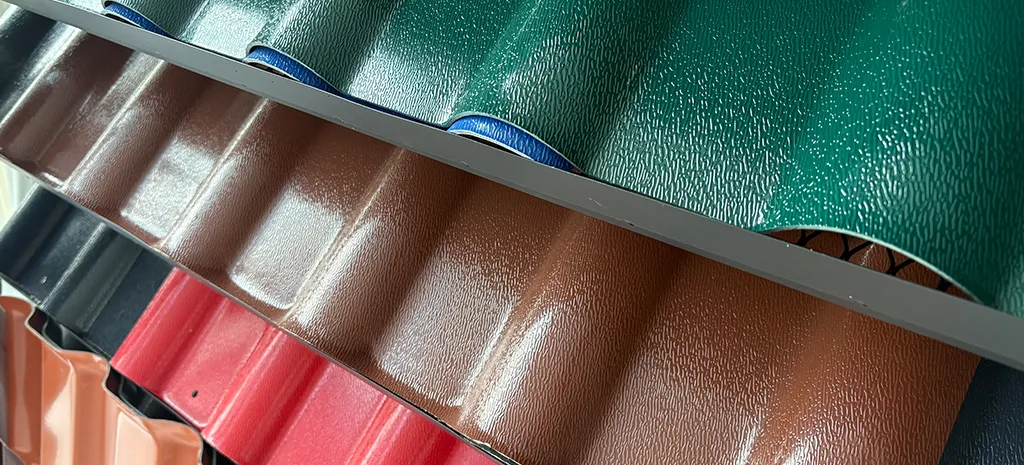
What are PVC Roofing Sheets? A High-Performance Solution for Modern Building Roofs
In the field of modern architecture, material innovation continues to drive the industry toward greater efficiency, sustainability, and cost-effectiveness. Among […]

The manufacturing of PVC (Polyvinyl Chloride) roof sheets is a sophisticated industrial process that transforms raw materials into a durable, weather-resistant, and long-lasting building product. Understanding this process highlights the engineering behind these sheets and explains their superior performance characteristics. Here’s a step-by-step look into how PVC roof sheets are made.
The process begins with the careful selection and blending of raw materials. This formulation is critical as it determines the sheet’s properties.
PVC Resin: The primary component, a white powder that forms the base polymer matrix.
Impact Modifiers: Additives (such as CPE or acrylics) are incorporated to enhance toughness and prevent the sheet from becoming brittle, especially in cold weather. This is crucial for impact resistance against hail.
Heat Stabilizers: Essential additives that prevent the degradation of PVC under heat and UV radiation during processing and throughout the product’s life. They are key to the material’s long-term durability.
UV Absorbers & Light Stabilizers: These additives work to filter out harmful ultraviolet rays, preventing yellowing and maintaining mechanical strength over decades of sun exposure.
Pigments: Inorganic pigments are added to provide color. They are chosen for their weather stability to ensure the color remains consistent and fade-resistant.
Lubricants (Internal & External): These aid in the processing of the material, reducing friction during extrusion and preventing the sheet from sticking to the manufacturing equipment.
Fillers (optional): In some formulations, fillers like calcium carbonate may be used to adjust cost and certain physical properties.
These ingredients are precisely weighed according to a proprietary recipe and then mixed in a high-speed hot mixer to create a homogeneous, free-flowing dry blend.
This dry blend is then fed into the hopper of a twin-screw extruder.
Heating and Melting: As the material moves through the barrels of the extruder, it is subjected to intense heat and pressure. It melts into a viscous, plasticized state.
Compression and De-gassing: The twin screws knead, compress, and homogenize the melt, ensuring all additives are perfectly dispersed. A vacuum vent removes any trapped air or moisture, preventing defects in the final product.
Shaping: The molten, homogeneous PVC compound is then forced through a flat-die head, which shapes it into a continuous sheet of the precise width and thickness required.
Immediately after exiting the die, the hot, soft sheet passes through a series of highly polished, chilled calender rolls.
These rolls apply extreme pressure to calibrate the final thickness with high precision.
They also impart the desired surface finish to the sheet—whether it is a smooth surface, a subtle woodgrain texture, or another pattern.
The cooling process begins here, solidifying the sheet’s form.
The sheet then travels through a long cooling tunnel or over a series of cooling rolls.
This stage is critical for setting the sheet’s dimensions and ensuring its structural stability.
Controlled, gradual cooling prevents internal stresses and warping, guaranteeing a flat, stable panel.
In-Line Cutting: For products that will be sold in coils, the continuous sheet is wound onto a large core using a tension-controlled winder.
Sheet Cutting: For rigid panels, an automated flying cut-off saw precisely cuts the continuous sheet into pre-determined lengths (e.g., 2m, 3m, 6m).
Rigorous QC: Throughout the entire process, quality control is paramount. Samples are tested for:
Thickness and Dimensional Tolerance
Impact Strength
Color Consistency
Weatherability (often tested in accelerated weathering chambers that simulate years of sun and rain in a matter of weeks)
Packaging: The finished sheets or coils are then carefully packaged to prevent damage during shipping and storage.
This controlled, automated process is what gives high-quality PVC roof sheets their defining advantages:
Homogeneity: The twin-screw extrusion ensures a uniform distribution of additives, meaning every square inch of the sheet has consistent performance.
Precision: The calendering process guarantees consistent thickness and flatness, which is vital for proper installation and weatherproofing.
Performance: The precise formulation and incorporation of UV stabilizers and impact modifiers during manufacturing are what make the sheets resistant to weathering, corrosion, and impact for over 20-30 years.
In conclusion, manufacturing PVC roof sheets is not a simple task; it is a complex fusion of material science and precision engineering, resulting in a high-performance, reliable, and maintenance-free roofing solution.
In the field of modern architecture, material innovation continues to drive the industry toward greater efficiency, sustainability, and cost-effectiveness. Among […]
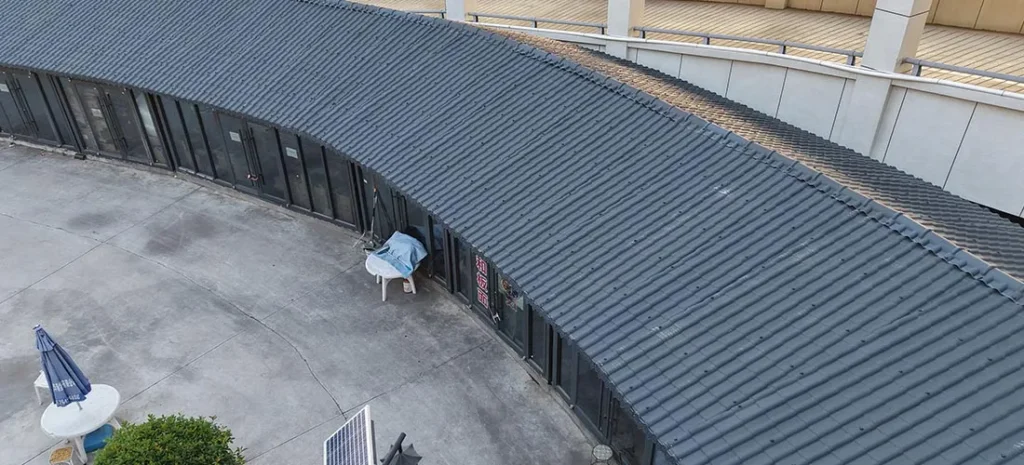
For buildings in tropical regions, roofs endure the harshest conditions: intense UV radiation, frequent heavy rainfall, extreme humidity, and coastal
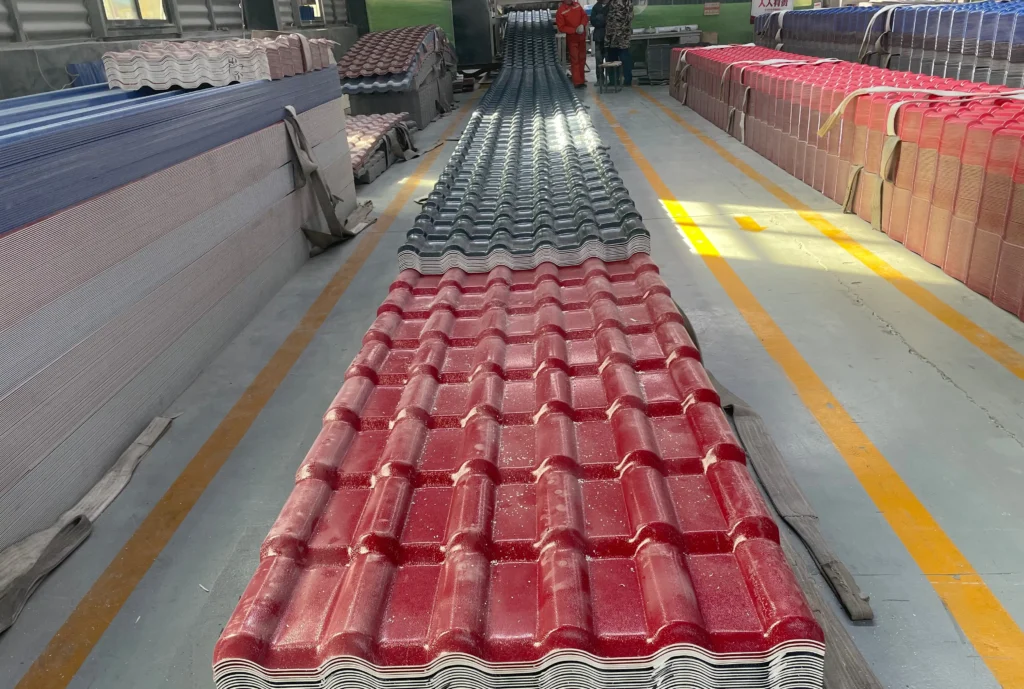
Imagine how those sturdy and colorful PVC roof panels transform from a pile of seemingly ordinary raw materials into protectors


