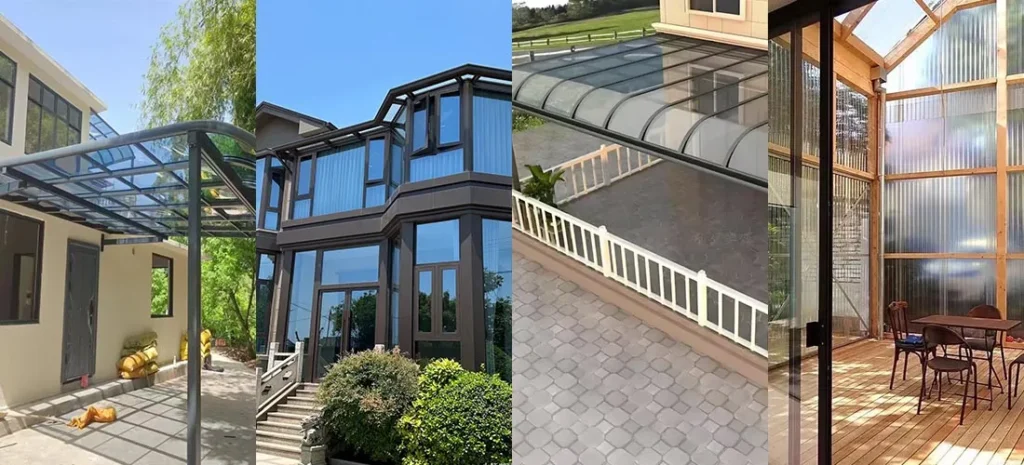
Common Transparent Roofing Materials on the Market
There is a wide variety of common transparent roofing materials available, each with its own advantages and disadvantages, making them […]

Greenhouses are designed to create a controlled environment for plants, balancing light transmission, insulation, durability, and cost. The choice of covering material—often referred to as “sheets” or “panels”—is critical to the performance and efficiency of a greenhouse. From traditional glass to modern polymers, here’s a breakdown of the best materials for greenhouse sheets and their key benefits.
Polycarbonate sheets are the most popular choice for modern greenhouses due to their durability, light diffusion, and excellent insulation properties.
Types:
Multi-Wall Polycarbonate: Features 2 to 5 layers with air pockets providing superior insulation (e.g., 8mm twin-wall or 16mm triple-wall).
Corrugated Polycarbonate: Single-layer sheets with a wavy design for structural strength and light diffusion.
Advantages:
Impact Resistance: Virtually unbreakable, making it ideal for areas prone to hail or storms.
Thermal Insulation: Traps heat effectively, reducing heating costs in colder climates.
Light Diffusion: Scatters sunlight evenly, preventing plant scorching and promoting uniform growth.
UV Protection: Coated to block harmful UV rays while transmitting optimal light for photosynthesis.
Lightweight: Easy to install and requires less structural support than glass.
Best For: Year-round commercial and hobbyist greenhouses, especially in extreme climates.
There is a wide variety of common transparent roofing materials available, each with its own advantages and disadvantages, making them […]

As a core covering material for modern agricultural greenhouses, corrugated plastic sheets demonstrate significant advantages in balancing functionality and economy


