
Product Overview: Redefining Building Facades
Exterior insulated metal cladding is an advanced building envelope system that perfectly combines the appearance of decorative metal wall panels with the high-efficiency polyurethane insulation performance. This composite panel uses color-coated metal as the external decorative surface and is filled internally with high-density polyurethane insulation material, forming an integrated exterior wall solution that incorporates decoration, insulation, and protection. Unlike traditional exterior insulation systems, this metal cladding completes all component integration in the factory, ensuring each panel has consistent performance and aesthetic appeal, providing modern architecture with an exterior wall option that is both beautiful and efficient.

Core Structure and Technical Characteristics
Multi-layer Composite Structure Design
External Decorative Layer:
- Base Material: Uses aluminum-zinc coated steel (GL) or galvanized steel (GI), thickness 0.4-0.8mm
- Surface Coating: High-quality polyester (PE), silicone-modified polyester (SMP) or fluorocarbon (PVDF) coating
- Color Options: Standard RAL color system and custom color matching, providing 30+ years color guarantee
- Texture Effects: Can provide various surface effects including matte, semi-matte, metallic texture, etc.
Internal Insulation Layer:
- Core Material: Rigid polyurethane foam (PUR/PIR), density 40-45kg/m³
- Thermal Performance: Thermal conductivity as low as 0.022-0.024W/(m·K)
- Thickness Options: 40mm, 50mm, 60mm, 80mm, 100mm and other specifications
- Closed-cell Structure: Closed-cell content ≥92%, effectively blocking moisture vapor penetration
Internal Protective Layer:
- Inner Panel: Typically uses galvanized steel or aluminum panel, thickness 0.4-0.6mm
- Fire Treatment: Can add fire-resistant layer or use fire-resistant core material as required
- Moisture Protection Design: Built-in moisture barrier or moisture-resistant coating treatment
Key Technical Parameters
| Performance Indicator | Technical Parameter | Testing Standard |
|---|---|---|
| Thermal Conductivity | ≤0.024 W/(m·K) | GB/T 10294 |
| Fire Rating | Class B1 (Flame Retardant Material) | GB 8624 |
| Wind Load Resistance | ≥2.0 kPa | GB/T 15227 |
| Water Tightness | ≥500 Pa | GB/T 15228 |
| Sound Insulation Performance | 25-35 dB | GB/T 19889 |
| Corrosion Resistance | 1000 hours salt spray test without red rust | GB/T 10125 |
Product Advantages and Core Value
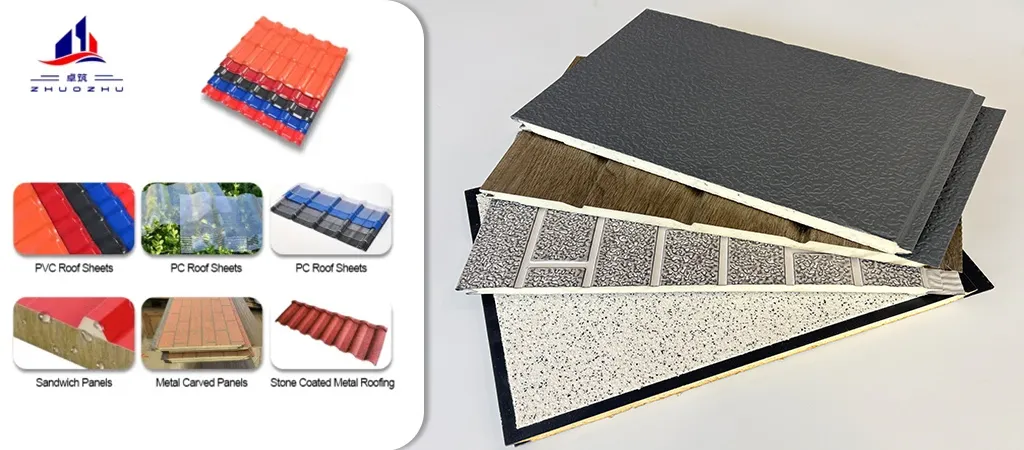
Excellent Aesthetic Performance
Diverse Appearance Options:
- Rich Colors: Provides hundreds of standard colors and custom color matching services
- Multiple Textures: Includes various surface treatments such as flat, micro-groove, wood grain, stone pattern, brick pattern
- Flexible Forms: Can be processed into various forms including flat panels, perforated panels, special-shaped panels
- Precise Dimensions: Factory prefabrication ensures dimensional accuracy and installation flatness
Long-lasting Decorative Effects:
- Color Stability: High-quality coating provides excellent UV resistance
- Self-cleaning Properties: Some coatings have self-cleaning functions, reducing maintenance needs
- Weather Resistance: Design service life can reach 30+ years
- High Consistency: Factory production ensures consistent color and texture between batches
Excellent Thermal Insulation and Energy Efficiency Performance
Efficient Thermal Insulation:
- Continuous Insulation Layer: Completely eliminates thermal bridging effects
- High R-value Performance: 100mm thickness can achieve R-value above 4.5 m²·K/W
- Good Air Tightness: Panel joint design ensures excellent air tightness
- Significant Energy Saving: 30-50% more energy efficient than traditional exterior walls
Comprehensive Thermal Advantages:
- Winter Insulation: Effectively reduces heat loss, lowering heating energy consumption
- Summer Heat Protection: Reflects solar radiation, reduces air conditioning load
- Condensation Prevention: Maintains interior surface temperature above dew point, preventing condensation
- Temperature Stability: Reduces indoor temperature fluctuations, improving comfort
System Features and Installation Advantages
Modular Design Concept
Standardized Production:
- Uniform Specifications: Standard width 1000mm, length can be customized as needed
- Precise Connections: Uses concealed or exposed connection systems, ensuring installation accuracy
- Complete Accessories: Includes all necessary corner codes, edge trims, connectors, etc.
- Controlled Quality: Factory production ensures quality consistency for each panel
Rapid Installation System:
- Dry Construction: No on-site wet work required, unaffected by weather
- Quick Installation: 50%+ faster than traditional exterior wall construction
- Simplified Process: Single installation completes both decorative and insulation functions
- Seasonal Adaptation: Can be installed during traditional off-seasons like winter
Innovative Connection Technology
Concealed Connection System:
- Clean Aesthetics: Connectors completely hidden, continuous and complete appearance
- Reliable Waterproofing: Multiple waterproofing designs ensure long-term sealing performance
- Thermal Bridge Control: Uses thermal break connectors, reducing heat transfer
- Flexible Adjustment: Three-dimensional adjustable system adapts to various installation conditions
Exposed Connection System:
- Easy Installation: Exposed screws allow more flexible installation and adjustment
- Convenient Maintenance: Easy to disassemble and replace individual panels
- Cost-effective: Relatively lower material and installation costs
- Ventilation Design: Can form ventilation cavities, enhancing system durability
Application Fields and Project Types
Commercial and Public Buildings
Office Buildings and Business Centers:
- Modern, clean appearance enhances building grade
- Excellent insulation performance reduces operating costs
- Quick installation minimizes disruption to office operations
- Durability reduces long-term maintenance costs
Retail and Commercial Spaces:
- Rich colors and textures create unique commercial image
- Good indoor environment enhances customer experience
- Quick renovation adapts to commercial format changes
- Durable surface withstands high-traffic environments
Industrial and Special Buildings
Industrial Plants and Warehouses:
- Excellent insulation performance improves working environment
- Durable surface resists industrial environmental impacts
- Rapid construction shortens project timeline
- Simple maintenance reduces operating costs
Cold Chain Logistics Facilities:
- Excellent insulation performance ensures temperature stability
- Moisture-proof design adapts to high humidity environments
- Durable surface withstands frequent cleaning
- Modular design facilitates future expansion
Technical Comparison and Selection Guide
Comparison with Traditional Exterior Wall Systems
| Comparison Item | Metal Insulated Cladding | Traditional Coated Walls | Curtain Wall System |
|---|---|---|---|
| Insulation Performance | Excellent (continuous insulation) | Average (spot insulation) | Good |
| Installation Speed | Very Fast (dry construction) | Slow (multiple processes) | Medium |
| Service Life | 30+ years | 8-10 years | 25 years |
| Maintenance Cost | Low | High | Medium |
| Initial Investment | Medium | Low | High |
Thickness Selection Recommendations
Recommendations for Different Climate Zones:
- Severe Cold Regions: 80-100mm thickness to meet high insulation requirements
- Cold Regions: 60-80mm thickness to balance performance and cost
- Hot Summer/Cold Winter Regions: 50-60mm thickness to address both seasonal needs
- Hot Summer/Warm Winter Regions: 40-50mm thickness with emphasis on summer heat protection
Installation and Maintenance Key Points
Professional Installation Process
Preliminary Preparation Stage:
- Substrate inspection and treatment to ensure flatness and stability
- Survey layout to determine installation reference points
- Material arrival inspection to verify specifications and quantities
- Technical briefing to clarify installation key points
Installation Implementation Stage:
- Install starter panels to establish installation reference
- Sequential installation to ensure uniform panel joints
- Connection and fixation according to design requirements
- Sealing treatment to ensure waterproof performance
Quality Control Stage:
- Process inspection to correct deviations promptly
- Final acceptance for comprehensive quality check
- Documentation archiving to record installation data
- User training to guide daily maintenance
Scientific Maintenance Program
Regular Maintenance:
- Periodic surface cleaning to maintain appearance
- Check sealant condition and repair promptly as needed
- Check fasteners to ensure secure attachment
- Check drainage systems to maintain smooth flow
Professional Maintenance:
- Professional inspection every 5 years
- Sealant renewal as required
- Local damage repair
- Surface coating renewal if needed
Sustainable Development Contributions
Energy Saving and Environmental Benefits
Energy Conservation:
- Reduces building heating and cooling energy consumption
- Reduces greenhouse gas emissions
- Improves building energy utilization efficiency
- Extends building service life
Material Environmental Benefits:
- Use of recyclable materials
- Low pollution during production process
- Minimal waste during construction process
- Long service life reduces resource consumption
Green Building Certification
Supports Multiple Certification Systems:
- LEED Certification: Contributes to multiple points including energy performance, material selection
- Green Building Evaluation Standards: Meets multiple green building requirements
- Passive House Standards: Can be used as high-performance envelope system
- Healthy Building Standards: Provides good indoor environment
Future Development Trends
Technological Innovation Directions
Material Technology Development:
- Higher performance insulation materials
- More environmentally friendly surface coatings
- More intelligent functional integration
- More easily recyclable composite materials
System Integration Innovation:
- Photovoltaic integration design
- Intelligent temperature control system integration
- Self-healing function development
- Enhanced modularity
Market Application Expansion
Emerging Application Areas:
- Urban renewal and existing building renovation
- Modular and prefabricated construction
- Special climate zone buildings
- Temporary and emergency buildings
Conclusion: The Ideal Choice for Exterior Wall Systems
Exterior insulated metal cladding systems, with their unique aesthetic performance, excellent insulation properties, and efficient installation advantages, are becoming the ideal choice for modern building facade systems. They can not only meet architects’ design creativity but also provide owners with long-term energy-saving benefits and maintenance convenience. As the construction industry’s requirements for energy efficiency and sustainability continue to increase, this integrated solution combining decorative metal panel appearance with polyurethane insulation performance will undoubtedly occupy an increasingly important position in the future construction market.
Selecting the appropriate exterior insulated metal cladding system requires comprehensive consideration of multiple factors including building type, climate conditions, aesthetic requirements, and economic budget. It is recommended to cooperate with professional suppliers and technical consultants to conduct detailed technical and economic analysis to ensure selection of the most suitable solution for project needs.
Technical Summary and Selection Recommendations
Recommended Application Scenarios:
- Commercial buildings pursuing modern aesthetic effects
- Industrial and logistics facilities requiring rapid construction
- Existing building energy-saving renovation projects
- Buildings in special climate conditions
Key Selection Factors:
- Insulation thickness determined based on climate zone and energy-saving requirements
- Surface coating selected based on aesthetic requirements and environmental conditions
- Connection system designed based on building height and wind pressure requirements
- Color and texture coordinated with architectural style and surrounding environment
Quality Assurance Measures:
- Select qualified professional suppliers
- Require provision of product testing reports and certification documents
- Ensure installation team has professional experience
- Establish comprehensive quality control and acceptance procedures


