
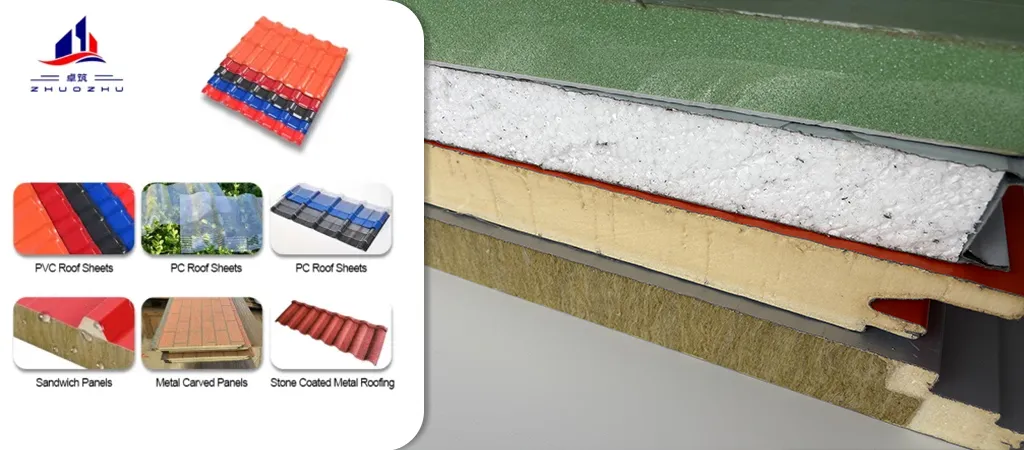
The performance of a sandwich panel hinges on its secret ingredient – the insulation core material. Different core materials directly determine the panel’s thermal efficiency, fire rating, structural strength, and cost. As a key component of the building envelope, selecting the right core material is crucial.
Below is a detailed comparative analysis of the mainstream sandwich panel core materials available on the market.
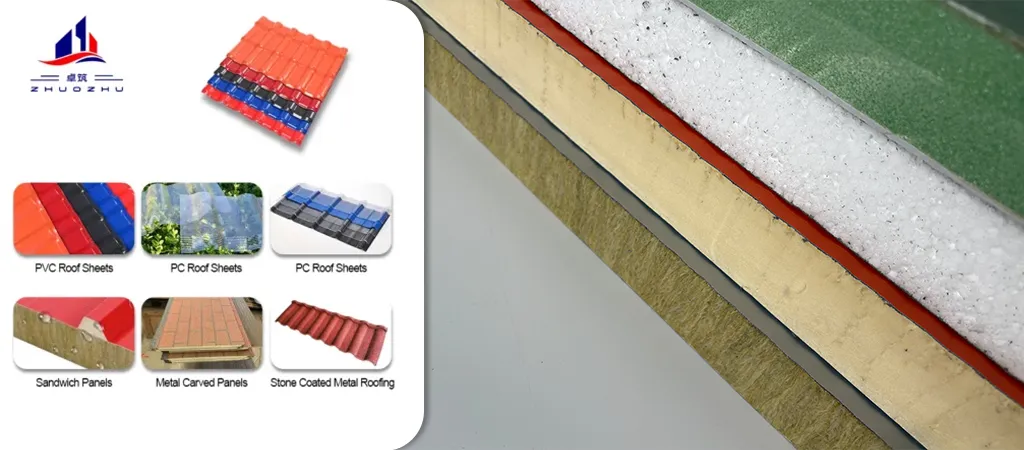
1. Polyurethane / Polyisocyanurate – The King of Comprehensive Performance
- Common Names: PUR / PIR, PUF Sandwich Panel
- Core Characteristics: A closed-cell foam structure generated by the reaction of isocyanate and polyol. PIR is a modified version of PUR, typically offering better temperature and fire resistance.
| Aspect | Evaluation |
|---|---|
| Thermal Performance | Excellent (★★★★★) • Lowest thermal conductivity (0.022-0.024 W/(m·K)) • Highest R-value (R-6.5 to R-7.0 per inch), insulation efficiency is 1.5 times greater than EPS and rock wool. |
| Fire Performance | Very Good (PIR ★★★★☆ / PUR ★★★☆☆) • PIR can achieve Class B1 (Flame Retardant), self-extinguishing. • Forms a char layer when burning, slowing combustion. |
| Structural Strength | High (★★★★☆) • Closed-cell structure bonds strongly with metal facings, good bending and compressive resistance. |
| Moisture/Corrosion Resistance | Excellent (★★★★★) • Closed-cell content >92%, virtually non-water-absorbent, effectively prevents internal condensation and corrosion. |
| Weight | Light (★★★★☆) • Density typically 38-45 kg/m³, lightweight. |
| Cost | Higher, but offers excellent energy efficiency ROI. |
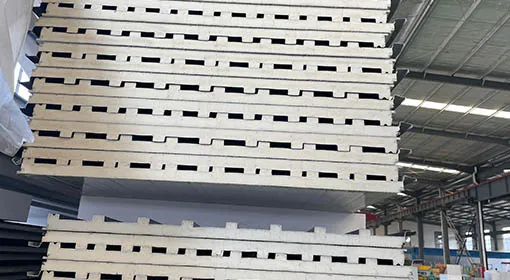
Summary & Primary Applications:
PUR/PIR is the preferred choice for top-tier thermal efficiency and energy-saving requirements. Especially suitable for:
- Cold chain logistics (Cold Room Panels)
- High-end industrial plants, commercial buildings
- Applications with space constraints requiring high insulation (achieves equivalent insulation with thinner profiles)
2. Rock Wool / Mineral Wool – The Guardian of Fire Safety
- Common Names: Rock Wool, Stone Wool
- Core Characteristics: Inorganic fibers made by melting basalt rock and spinning it in a centrifuge.
| Aspect | Evaluation |
|---|---|
| Thermal Performance | Good (★★★☆☆) • Thermal conductivity ~ 0.036-0.042 W/(m·K). • R-value ~ R-4.0 to R-4.6 per inch. |
| Fire Performance | Excellent (★★★★★) • Class A Non-combustible material, withstands temperatures over 1000°C. • Mandatory choice for firewalls and fire partitions. |
| Structural Strength | Fair (★★☆☆☆) • Fibrous structure, low compressive and peel strength. • Potential for settling over time if dampened or subjected to vibration. |
| Moisture/Corrosion Resistance | Poor (★☆☆☆☆) • Open-cell structure, prone to moisture absorption. • Thermal performance severely degrades when wet; weight increases. |
| Weight | Heavy (★★☆☆☆) • High density, panels are relatively heavy. |
| Cost | Medium |
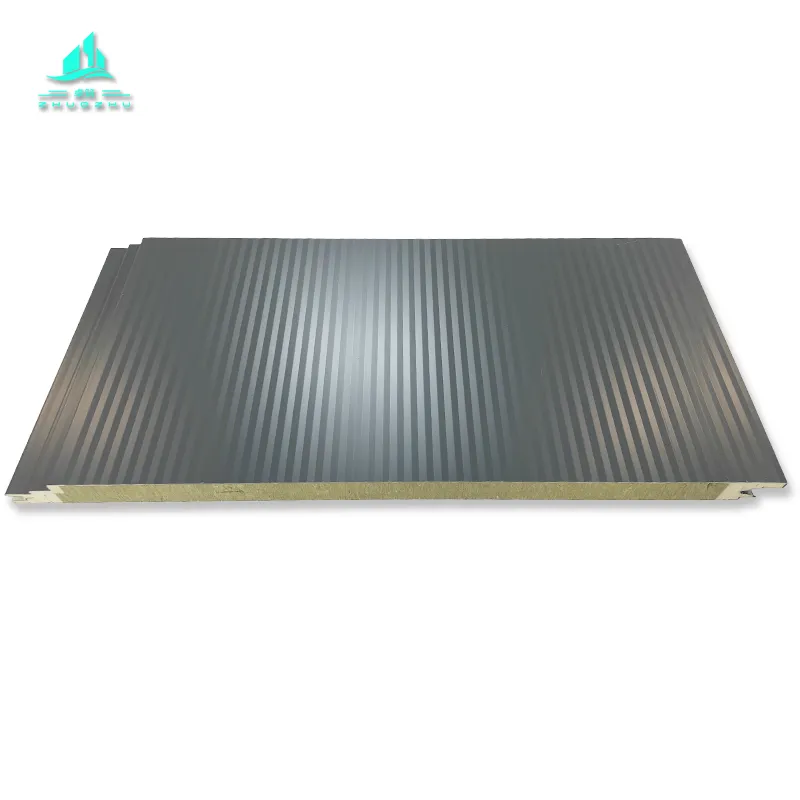
Summary & Primary Applications:
The core value of rock wool lies in its unparalleled fire safety. Primarily used in:
- Areas with mandatory fire rating requirements (e.g., chemical, power plants, public buildings)
- Fire partitions, escape routes
- Building exteriors and roofs requiring Class A fire certification
3. Polystyrene – The Economical & Practical Choice
Divided into Expanded Polystyrene (EPS) and Extruded Polystyrene (XPS).
A. Expanded Polystyrene (EPS)
- Common Names: EPS
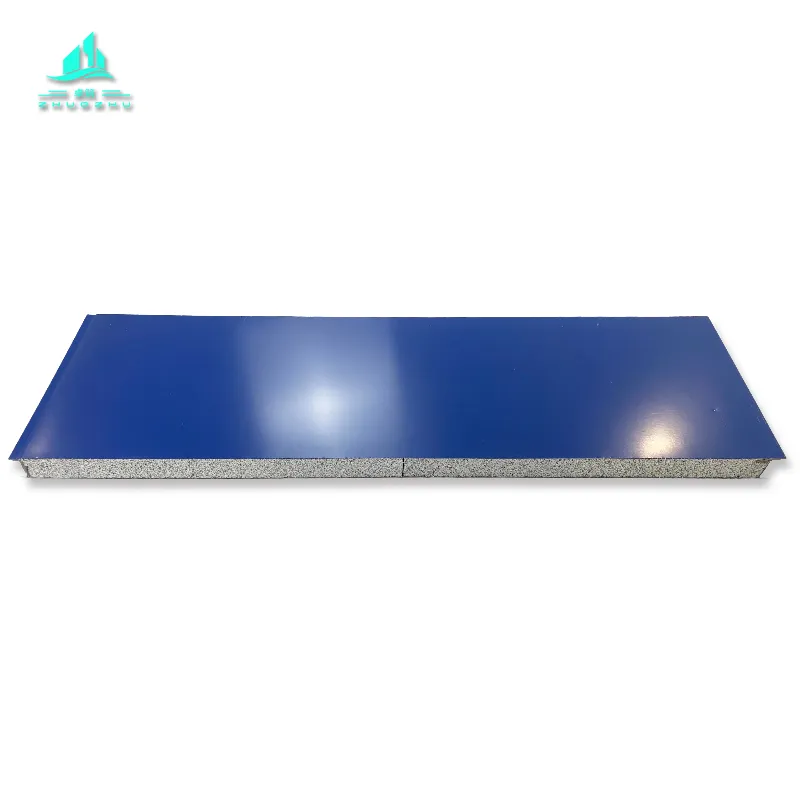
- Core Characteristics: Formed by pre-expanding polystyrene beads containing a blowing agent and heating them in a mold.
| Aspect | Evaluation |
|---|---|
| Thermal Performance | Fair (★★☆☆☆) • Thermal conductivity ~ 0.036-0.040 W/(m·K). • R-value ~ R-4.0 per inch. |
| Fire Performance | Poorer (★★☆☆☆) • Standard EPS is Class B2/B3 (Combustible/Flamable), requires flame retardants. • Shrinks and melts when exposed to fire, producing molten drips. |
| Structural Strength | Low (★☆☆☆☆) • Low strength, prone to compression and deformation. |
| Moisture/Corrosion Resistance | Fair (★★☆☆☆) • Gaps between beads allow slow moisture absorption. |
| Weight | Lightest (★★★★★) • Very low density, extremely lightweight. |
| Cost | Lowest, highly price-competitive. |
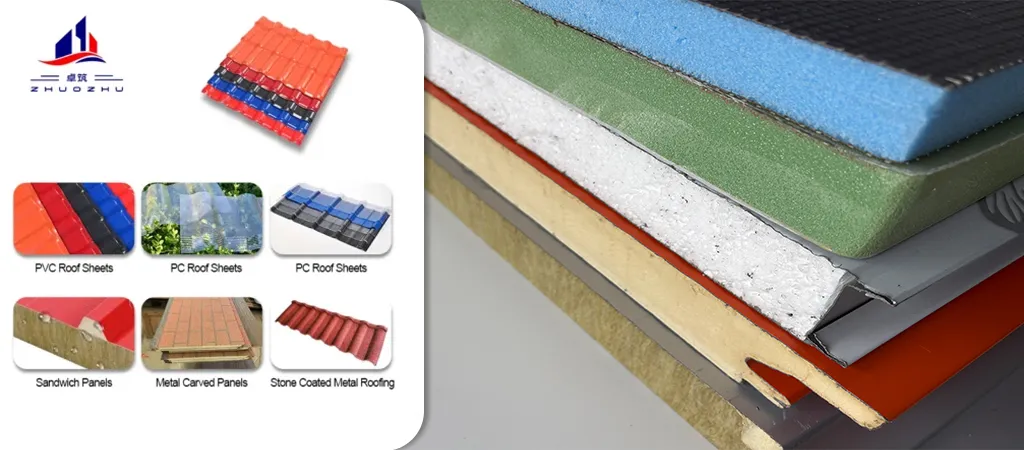
Summary & Primary Applications:
EPS is the first choice for cost-sensitive projects. Suitable for:
- Temporary structures, warehouses with low insulation demands
- Walls in standard industrial plants (non-load bearing areas)
- Market sheds
B. Extruded Polystyrene (XPS)
- Common Names: XPS
- Core Characteristics: A closed-cell board made from polystyrene resin and additives through an extrusion process.
| Aspect | Evaluation |
|---|---|
| Thermal Performance | Good (★★★☆☆) • Thermal conductivity ~ 0.030-0.035 W/(m·K), better than EPS. • R-value ~ R-5.0 per inch. |
| Fire Performance | Similar to EPS, requires flame retardants. |
| Structural Strength | High (★★★★☆) • High compressive strength is a standout feature. |
| Moisture/Corrosion Resistance | Excellent (★★★★★) • Closed-cell structure, very low water absorption, excellent moisture resistance. |
| Weight | Light (★★★★☆) |
| Cost | Higher than EPS, lower than PUR/PIR. |
Summary & Primary Applications:
XPS excels in applications requiring high compressive strength and moisture resistance. Commonly used for:
- Floor insulation, cold storage floors
- Inverted roofs
- Basement retaining walls
Core Material Comparison Quick-Reference Table
| Core Material | Thermal | Fire | Strength | Moisture | Weight | Cost | Key Advantage |
|---|---|---|---|---|---|---|---|
| PUR/PIR | ★★★★★ | ★★★★☆ | ★★★★☆ | ★★★★★ | ★★★★☆ | High | Best overall performance, top energy efficiency |
| Rock Wool | ★★★☆☆ | ★★★★★ | ★★☆☆☆ | ★☆☆☆☆ | ★★☆☆☆ | Medium | Class A non-combustible, ultimate fire safety |
| XPS | ★★★☆☆ | ★★☆☆☆ | ★★★★☆ | ★★★★★ | ★★★★☆ | Med-High | High compressive strength, excellent moisture resistance |
| EPS | ★★☆☆☆ | ★★☆☆☆ | ★☆☆☆☆ | ★★☆☆☆ | ★★★★★ | Low | Extremely lightweight, lowest cost |
How to Make the Right Choice for Your Project?
- Prioritize Fire Safety: Check local building codes. For areas with mandatory fire requirements, Rock Wool is often the only choice.
- Evaluate Insulation Needs:
- High Efficiency / Low-Temp Environments: Prioritize PUR/PIR.
- Standard Insulation: Consider XPS or EPS.
- Consider Structure & Environment:
- High Humidity / Cold Chain: PUR/PIR or XPS.
- Requires Load-bearing / Compression Resistance: XPS or PUR/PIR.
- Extremely Limited Budget: EPS.
- Calculate Total Cost of Ownership: Look beyond initial material cost. Consider long-term energy bills (thermal performance), maintenance costs (durability), and spatial costs (insulation thickness).
Conclusion:
There is no single “best” core material, only the “most suitable” one. PUR/PIR, with its exceptional all-around performance, is becoming the preferred choice for many high-end industrial and commercial projects; Rock Wool is irreplaceable in the realm of fire safety; while XPS and EPS play important roles within specific performance and cost brackets. Understanding their differences is the first step toward making an informed decision.


